


The wave-prone section of Provincial Highway No. 11 in Hualien is frequently impacted by large waves during the typhoon season, leading to road flooding, foundation erosion, and risks to road users. At the east breakwater of Hualien Port, personnel performing construction or inspection work, as well as recreational fishers, may face overtopping hazards during strong typhoon waves. Since 2022, IOT and NCKU have installed cameras along the “Ren Dìng Sheng Tian” section of Provincial Highway No. 11 and at Hualien Port, integrating image analysis and AI deep-learning technologies to interpret wave run-up on the coastal highway and detect overtopping at the east breakwater (see Figures 1 and 2). Numerical wave models were also applied, and machine-learning-based forecasting modules were developed (see Figure 3).
IOT integrated the image-based overtopping interpretation results, numerical simulation forecasts, and Hualien Port oceanographic observations and modeling data into the “Wave Attack Early Warning system for Hualien Coastal Highway” and the “Wave Overtopping Early Warning System for the Hualien Port East Breakwater” (see Figures 4 and 5). These platforms display overtopping alerts, numerical forecasts, and essential ocean–meteorological information for disaster management, serving as decision-support tools for the Hualien Maintenance Division and the Port of Hualien in traffic control, road-closure decisions, breakwater construction safety, personnel patrols, and management of recreational fishing activities – ultimately enhancing overall disaster-prevention effectiveness.
The “Wave Overtopping Early Warning System for the Hualien Port East Breakwater,” developed in 2025, has already been provided to the Port of Hualien. Due to ongoing breakwater construction following Typhoon Kong-rey in 2024, the system is now being used to support on-site operational safety and disaster prevention.
The “Wave Attack Early Warning System for Hualien Coastal Highway” has also been used by the Hualien Maintenance Division during typhoon events. Based on the project analysis, additional tetrapods (seen as the lighter-colored zone) were deployed in June 2025 at an overtopping-prone location north of the monitored road section, effectively reducing overtopping risks. However, since tetrapods may be displaced by strong wave action, image-based overtopping analysis and numerical forecasting remain necessary to ensure safety during typhoon conditions. Notably, the image-based overtopping interpretation technology developed in this project received the “Outstanding Achievement Award” award in the 2023 Recognition Program of the Disaster Management Society of Taiwan.
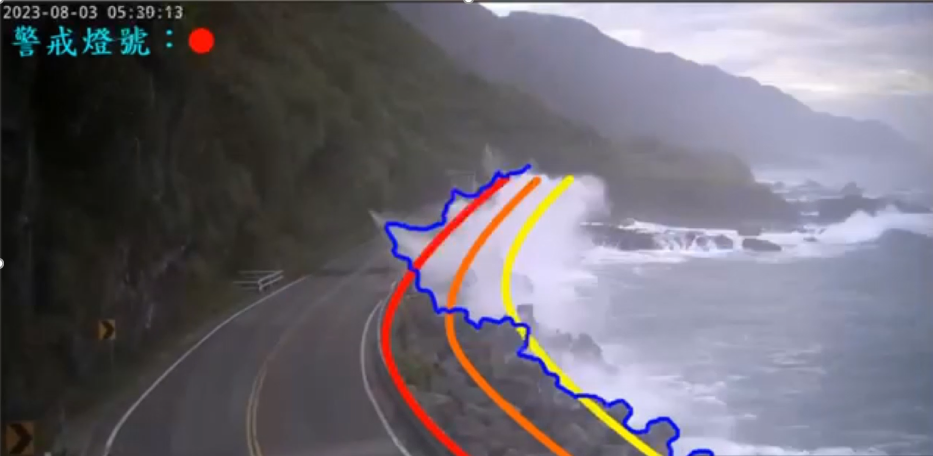
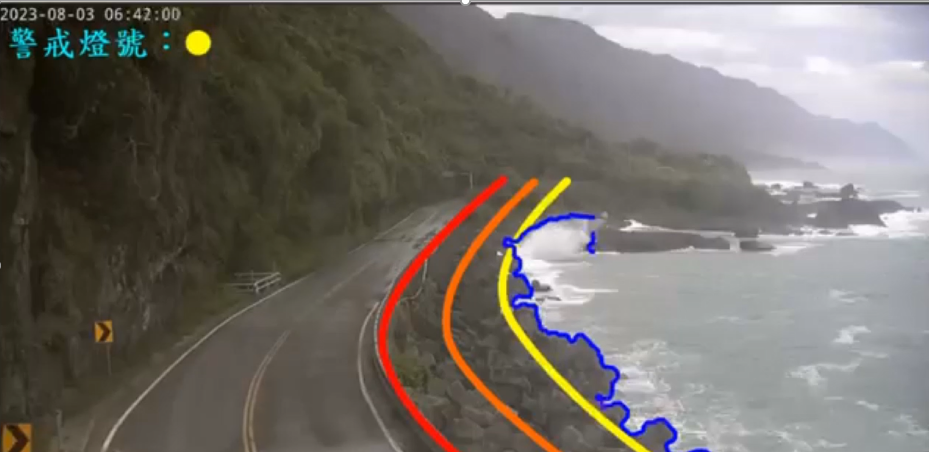
Fig.1 Wave overtopping interpretation results at the “Ren Dìng Sheng Tian” section of Provincial Highway No. 11
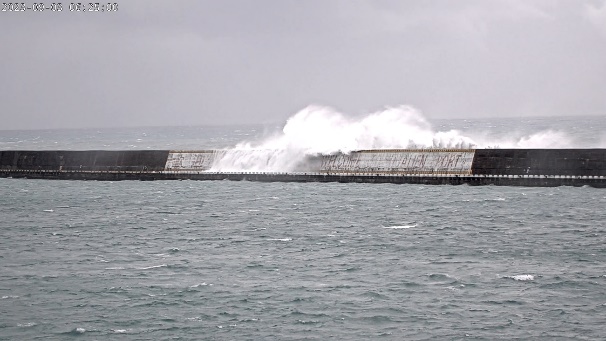
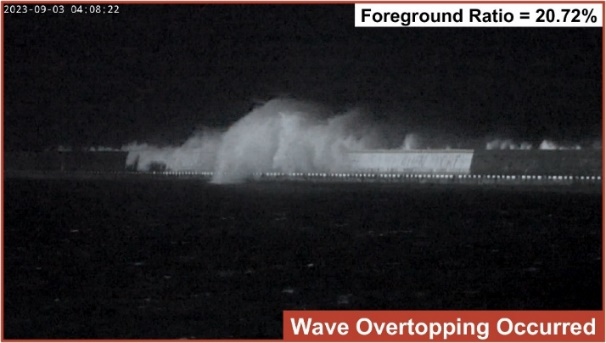
Fig.2 Wave overtopping interpretation results at the East Breakwater of Hualien Port
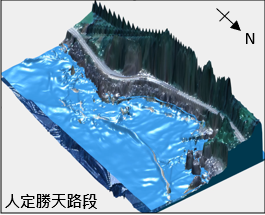
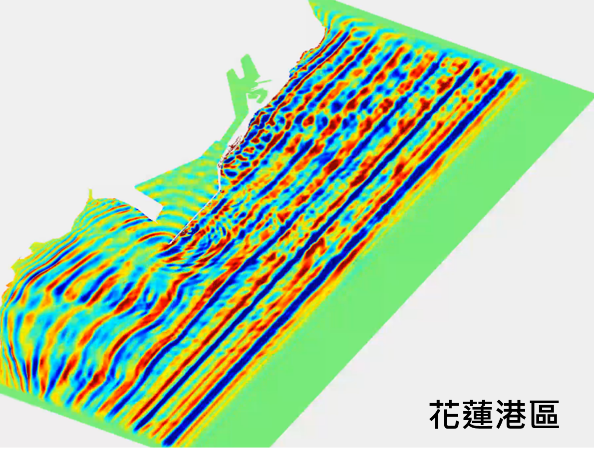
Fig.3 Numerical simulation results
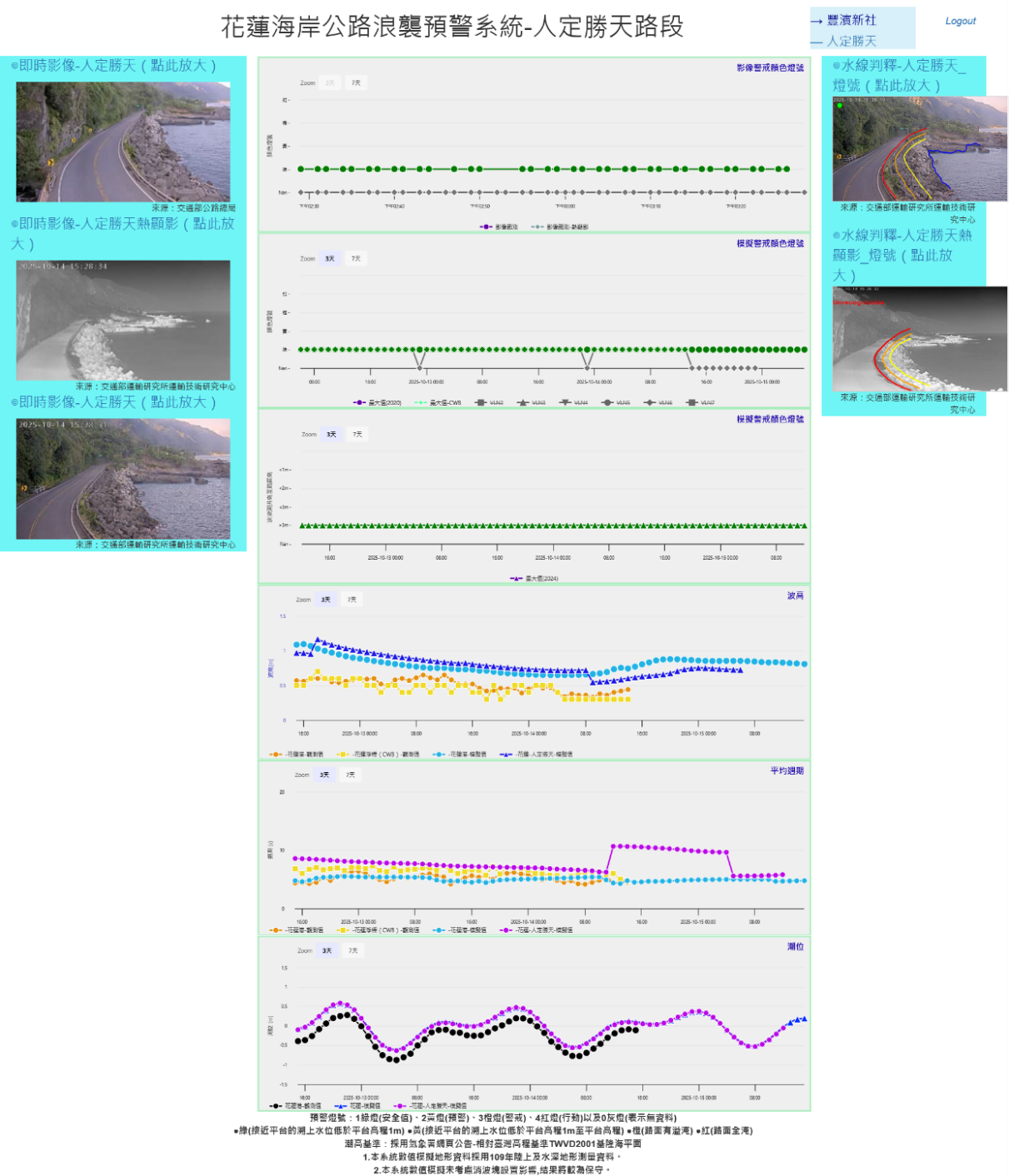
Fig.4 Wave Attack Early Warning System for Hualien Coastal Highway
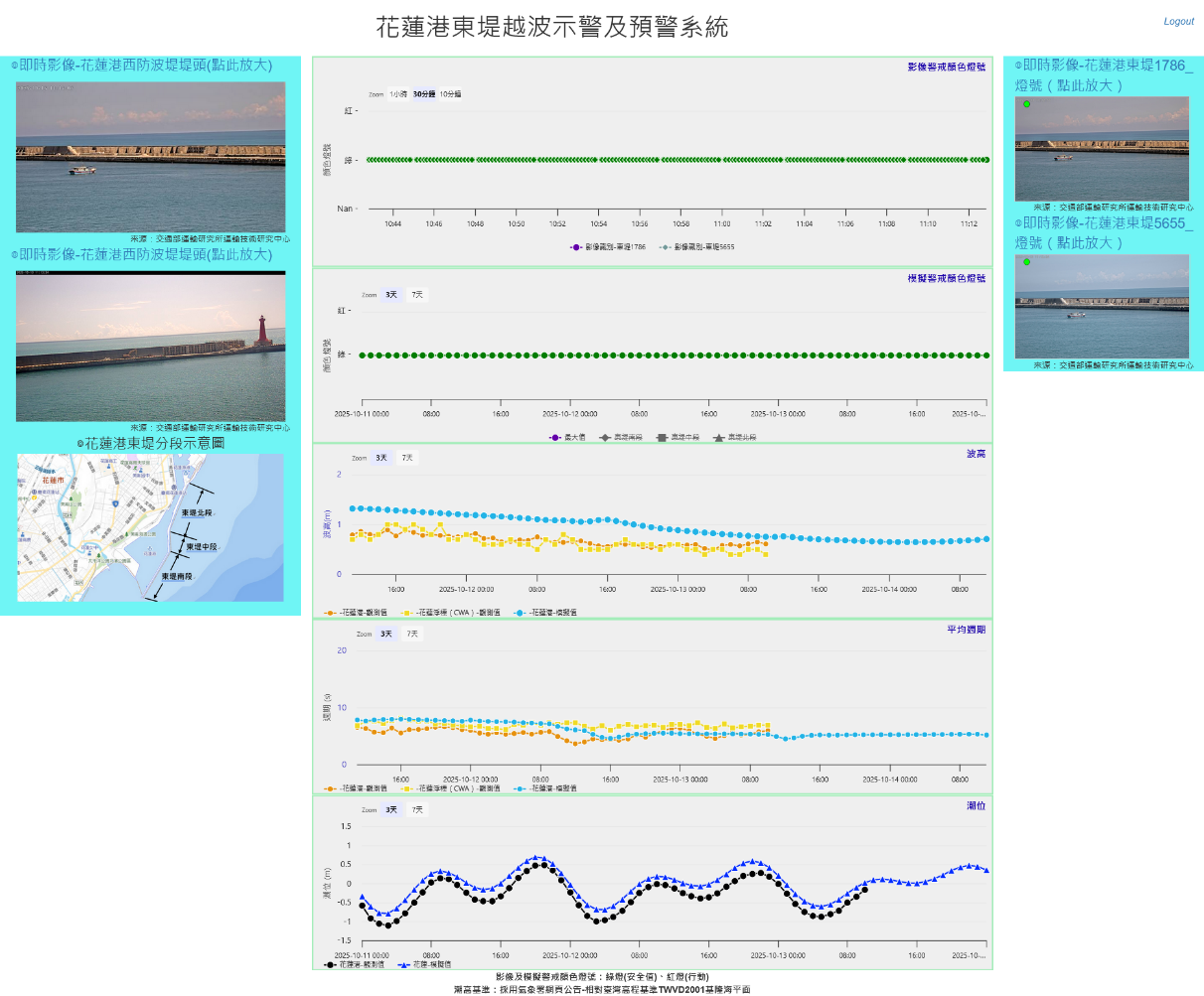
Fig.5 Wave Overtopping Early Warning System for the Hualien Port East Breakwater