


The study indicates that the global cruise market has experienced a strong post-pandemic recovery. In 2025, global cruise passenger volume reached a record high of 37.2 million passenger arrivals, representing a growth of approximately 25.3% compared to pre-pandemic levels. However, Asia has been the slowest region to recover globally, with approximately 3 million passenger arrivals in 2025, reaching only about 80% of pre-pandemic levels.
Passenger demographics and behaviors have also shifted. There is a trend toward younger travelers and an increased proportion of solo travelers. Expedition and luxury cruise passenger numbers are growing rapidly. It is projected that the proportion of mega-cruise ships will increase significantly in the future, while the share of small ships (such as expedition and luxury types) will also grow year by year. Furthermore, the proportion of tourists staying an extra night stay at the homeport before or after their cruise trip for accommodation and consumption has grown steadily, reaching over 64%.
Although Asia recovered slowly in the initial post-pandemic stage, it is expected to become the primary driver for future growth in cruise tourism. Taiwan remains one of the critical source markets in Asia. Prior to the pandemic (2016–2019), Taiwan ranked 11th globally for four consecutive years, making she the second-largest source market in Asia, behind only China. Due to the varying paces of regulatory relaxation across countries after the pandemic, Taiwan ranked 13th in 2025. The study recommends continuous implementation of diversified marketing strategies to expand Taiwan’s international visibility and attract more cruise lines to call at Taiwanese ports. Another noteworthy trend is the gradual entry of emerging markets, such as India, into the global major source markets following the pandemic.
Taiwan's cruise passenger volume grew year by year starting from 2012, surpassing 1 million passenger arrivals in 2018. In 2019, cruise ship calls reached 671, making Port of Keelung the second-largest cruise port in Asia, second only to Singapore and surpassing the Port of Shanghai. Following the outbreak of COVID-19 at the end of 2019, countries worldwide banned international cruise ships from docking, severely impacting the cruise industry. As the pandemic subsided, Taiwan actively promoted cruise tourism. In 2025, cruise ship calls reached 567, with passenger arrivals reaching 1.157 million, surpassing the pre-pandemic peak of 1.055 million.
Cruise tourism in Taiwan is undergoing a rapid recover with distinct post-pandemic changes:
- Increase in Port-of-Call Share: The share of port-of-call cruises rose to 39% in 2025.
- Higher Proportion of Foreign Passengers: The proportion of international travelers increased to 58% in 2024.
- Growth in Fly-Cruise Travelers: The share of Fly-Cruise passengers increased to 11% in 2023.
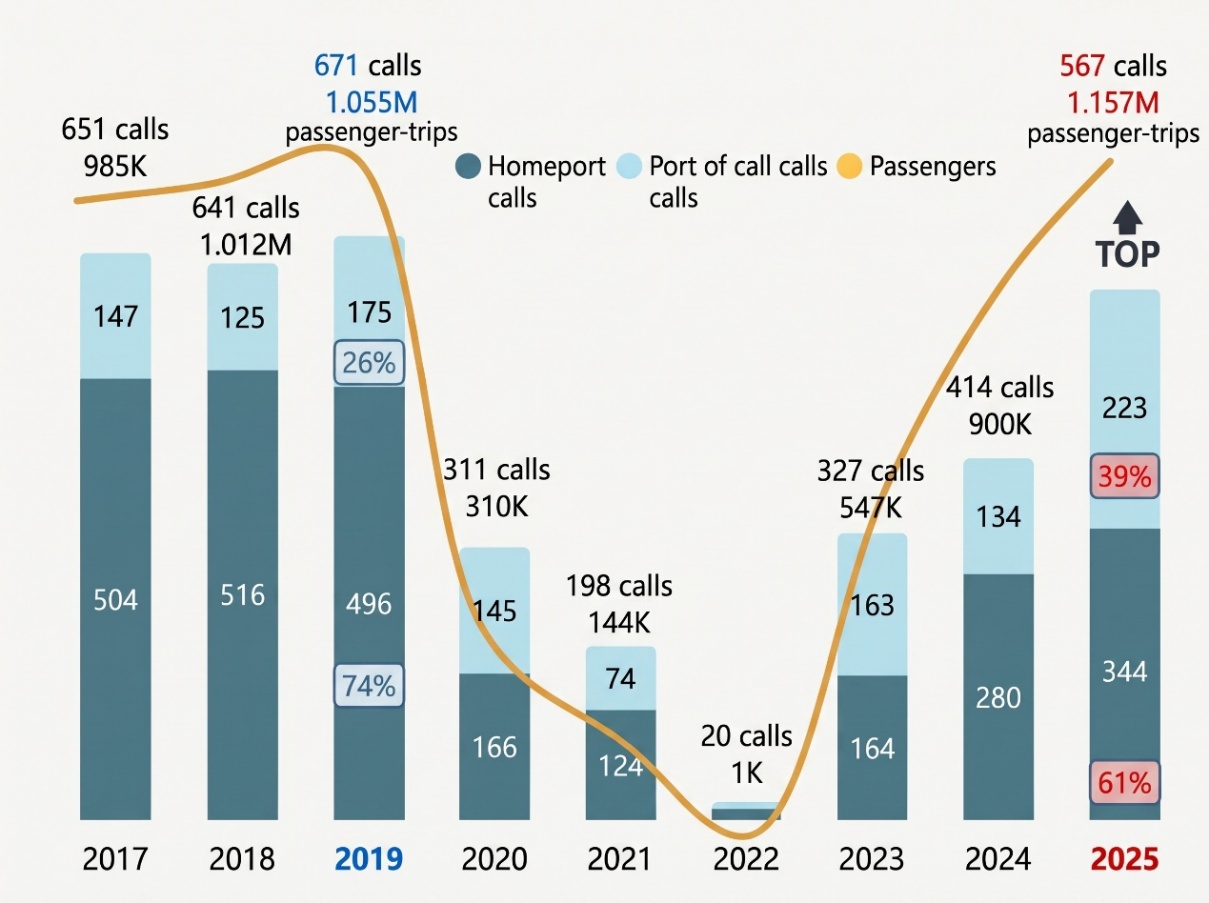 Source: Taiwan International Ports Corporation
Figure 1 Changes in Cruise Ship Calls and Passenger Arrivals at Taiwan Ports Before and After the Pandemic (2017–2025)
Table 1 Global and Regional Cruise Passenger Volume and Growth Rates Before and After the Pandemic Unit: Million
| Region | 2019 | 2023 | 2024 | 2025 | Pre/Post-Pandemic (2019–2023) Growth Rate | 2025 vs 2024 Growth Rate % |
| Global | 29.67 | 31.69 | 34.64 | 37.20 | 6.8% | 7.5% |
| North America | 15.41 | 18.10 | 20.53 | 22.10 | 17.5% | 7.5% |
| South America | 1.04 | 0.997 | 1.17 | 1.22 | 3.8% | 4.4% |
| Europe | 7.71 | 8.21 | 8.44 | 8.90 | 6.5% | 5.3% |
| Asia | 3.738 | 2.329 | 2.632 | 3.00 | -37.7% | 15% |
| Australia | 1.35 | 1.34 | 1.408 | 1.50 | -1% | 7.4% |
Source:State of the Cruise Industry Report 2025, CLIA ; compiled by this study
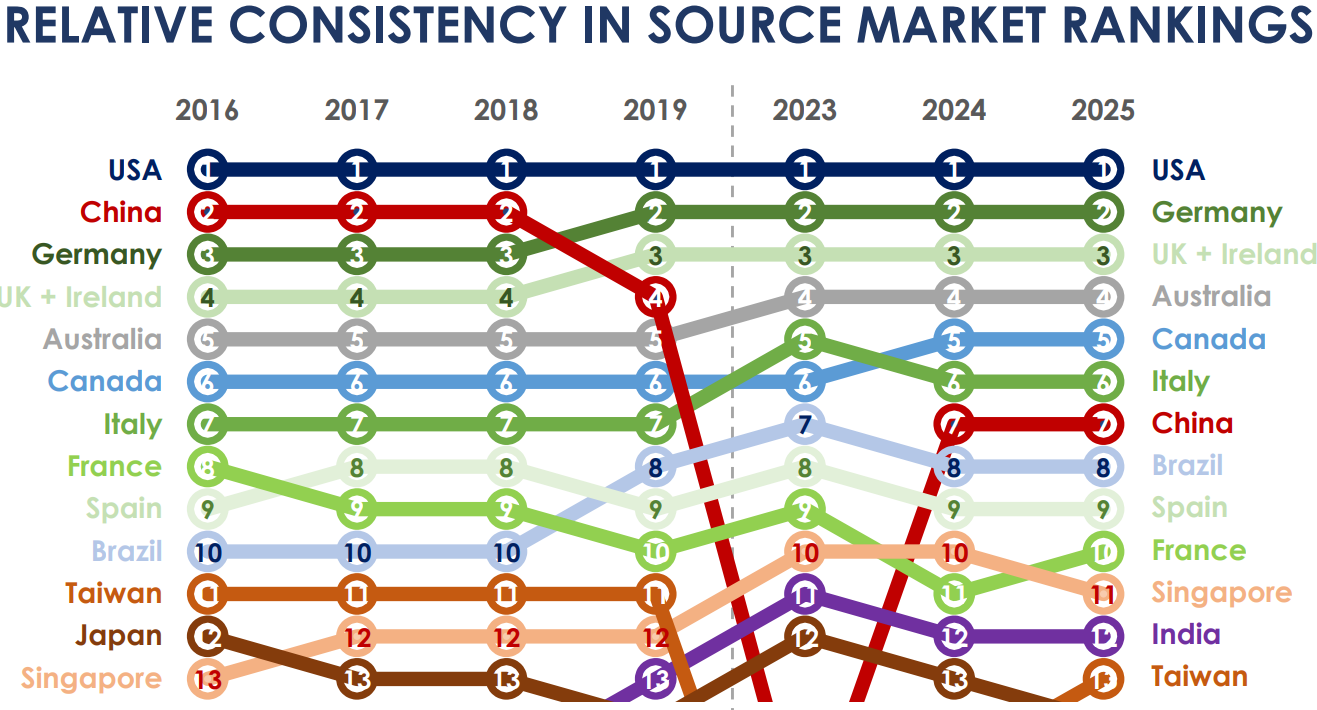
Source:State of the Cruise Industry Report 2026, CLIA
Figure 2 Changes in Major Global Source Markets from 2016 to 2025
Figure 2 Changes in Major Global Source Markets from 2016 to 2025