

To better understand the transfer patterns for passengers traveling from Southeast Asia to North America via Asia-Pacific hub airports, the Institute of Transportation (IOT) collected and analyzed passenger flow data from major hubs, including Taoyuan, Incheon, Hong Kong, Tokyo Narita, Tokyo Haneda, and Shanghai Pudong (PVG). The study analyzed transfer patterns to North American destinations, including Los Angeles (LAX), San Francisco (SFO), Ontario (ONT), Seattle (SEA), Chicago (ORD), Houston (IAH), New York (JFK), Vancouver(YVR), and Toronto (YYZ). In terms of transfer volume by route, the TaoyuanàSan Francisco route ranked first with 760,000 transfer passengers (Figure 2), significantly surpassing the second-ranked Tokyo HanedaàLos Angeles route (620,000). As for the proportion of transfer passengers, nearly all of the top ten routes recorded transfer shares exceeding 70%. The TaoyuanàSan Francisco route posted a ratio of 74.7%, while the highest was observed on the Tokyo HanedaàChicago route (93.8%).
Looking at Taoyuan Airport’s performance across North American routes, the San Francisco route remains highly competitive among other Asia-Pacific hubs, with strong performance also seen on the Los Angeles and Seattle routes. However, a noticeable gap remains on the New York route (Figure 3) , indicating that Taoyuan Airport’s competitiveness is concentrated in the western North American market, with room for improvement in the American Eastern market.
An extensive route network and high flight frequency are critical for developing a successful transfer hub. While Taoyuan Airport has already established a strong competitive advantage on routes to San Francisco and Los Angeles, additional growth opportunities remain. Continued expansion of direct North American services is recommended, including newly launched routes such as Phoenix (late 2025) and the upcoming Washington, D.C. service scheduled to begin in June, 2026. Further efforts should focus on exploring and strengthening the viability of potential routes, increasing flight frequencies on high-demand services to reduce transfer times, and deepening strategic partnerships with other airlines. These initiatives aim to attract more Southeast Asian travelers to choose Taoyuan Airport as their transfer hub for North America, narrow the gap with Incheon Airport, and reinforce its position as a key hub in the North American transfer market.
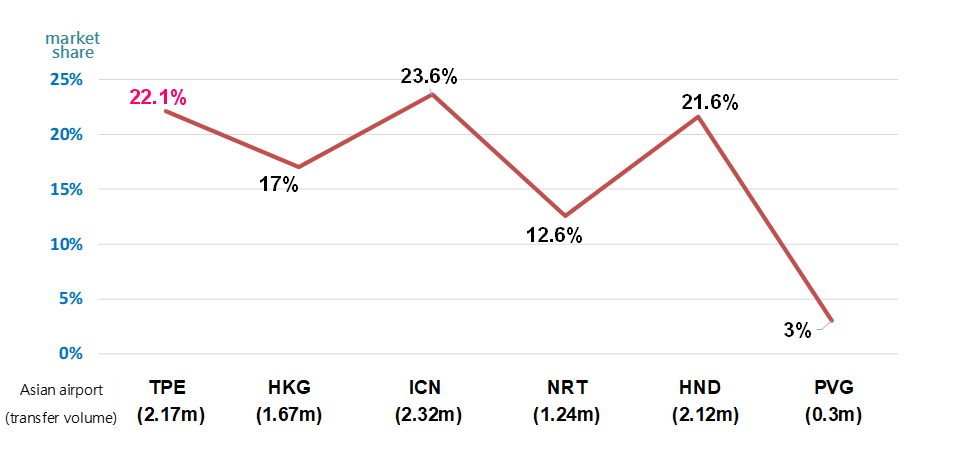
Figure 1: Market Share of Asia-Pacific Hub Airports for Transfers to Nine North American Destinations in 2024
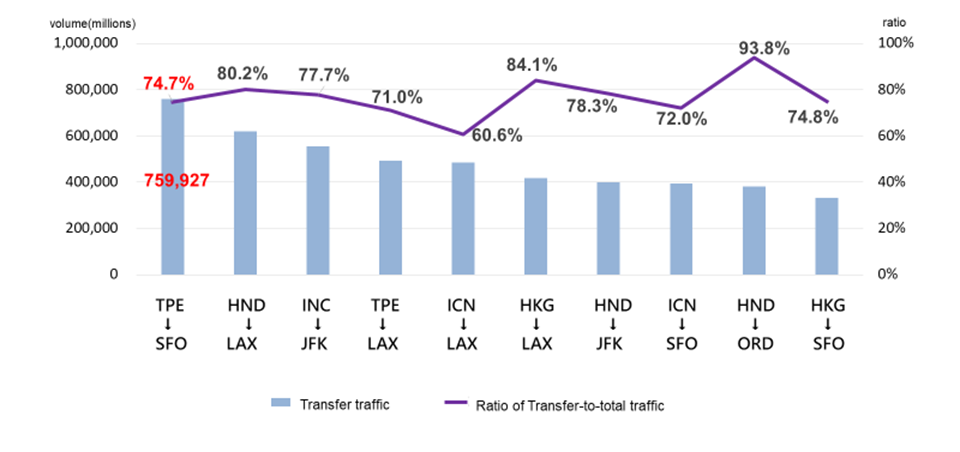
Figure 2: Top 10 Routes by Transfer Volume from Asia-Pacific Hub Airports to Nine North American Destinations in 2024
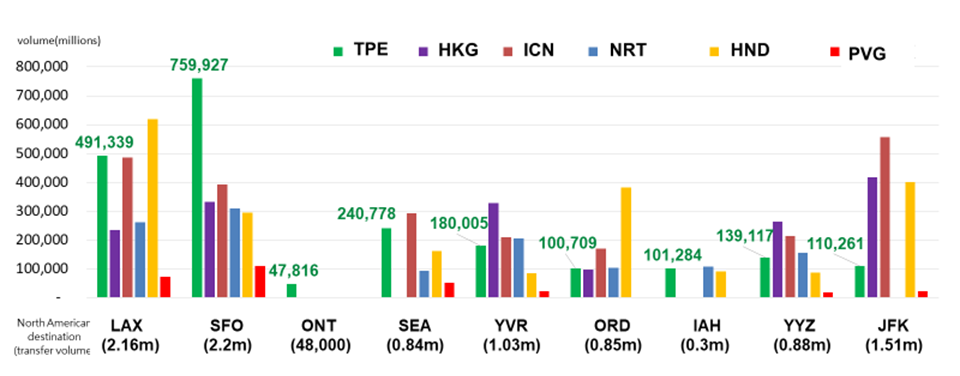
Figure 3: Passenger Volume from Southeast Asia Transferring via Asia-Pacific Hub Airports to Nine North American Destinations in 2024
(Note: If no passenger data is shown for a specific North American destination at an Asia-Pacific airport, it indicates that the airport does not have direct flights to that destination.)